


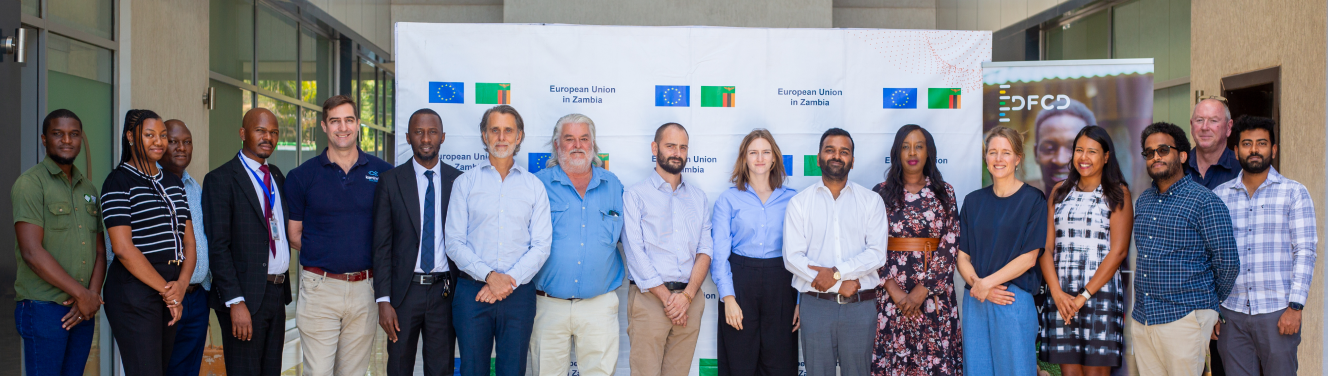
How can industry move to renewable biomass energy without placing new pressure on farmers, soils and forests? That question brought together ETG, FMO, the EU Delegation to Zambia, SNV and WWF-NL in Zambia last week for the ECOSHIFT workshop, where partners shared the lessons of the project's first phase and launched its second.
ECOSHIFT is ETG's initiative to build sustainable, farmer-inclusive bioenergy supply chains for its processing operations in Southern Africa. It is part of the Group's wider ambition to become a net positive company, giving more than it takes and leaving the people and landscapes it works with better off than before.
The workshop was sponsored by FMO, the Dutch entrepreneurial development bank. The second phase of the project is supported through the Dutch Fund for Climate and Development (DFCD), funded by the European Commission under EFSD+, and the DFCD Origination facility, funded by the Dutch Ministry of Foreign Affairs.
What Phase 1 taught us
The first phase looked at whether agricultural residues such as maize stalks and cobs, soya pods, groundnut shells, and sunflower husks could supply industrial bioenergy at scale. Working with the Empowering Farmers Foundation and Rural Africa Consult, the team surveyed more than 350 smallholder households across Zambia, Malawi and Zimbabwe to understand how these materials are used today.
The main finding was clear: crop residues are not simply "waste". Farmers use them to mulch and compost their fields, to feed livestock and as cooking fuel. Most farmers said they would be interested in selling residues, but taking them out of the farming system at scale could have unintended consequences:
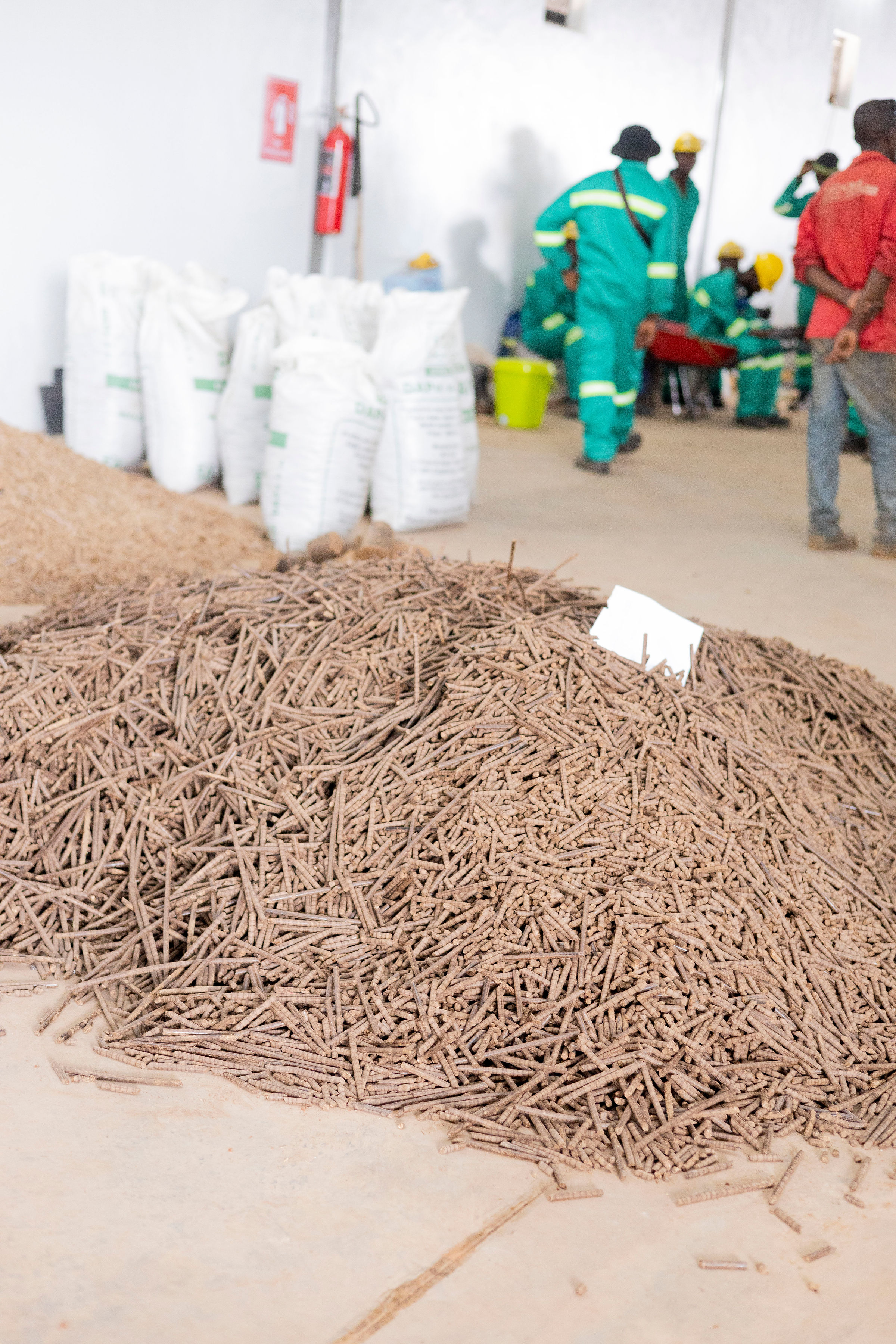
Phase 1 also tested the practical side. Pelletising trials at Mwembeshi in Zambia and Lilongwe in Malawi showed that pellets carry significantly more energy than raw residues. Because biomass is bulky but lightweight, sourcing needs to stay within roughly 30–50 km of a facility to keep logistics costs under control.
As a result, the team shifted strategy to consider dedicated energy crops as well, including grasses and short-rotation trees. Woody crops stood out as the most promising option for both smallholder and commercial production, especially in agroforestry systems.
Phase 2: growing energy, not taking it from the field
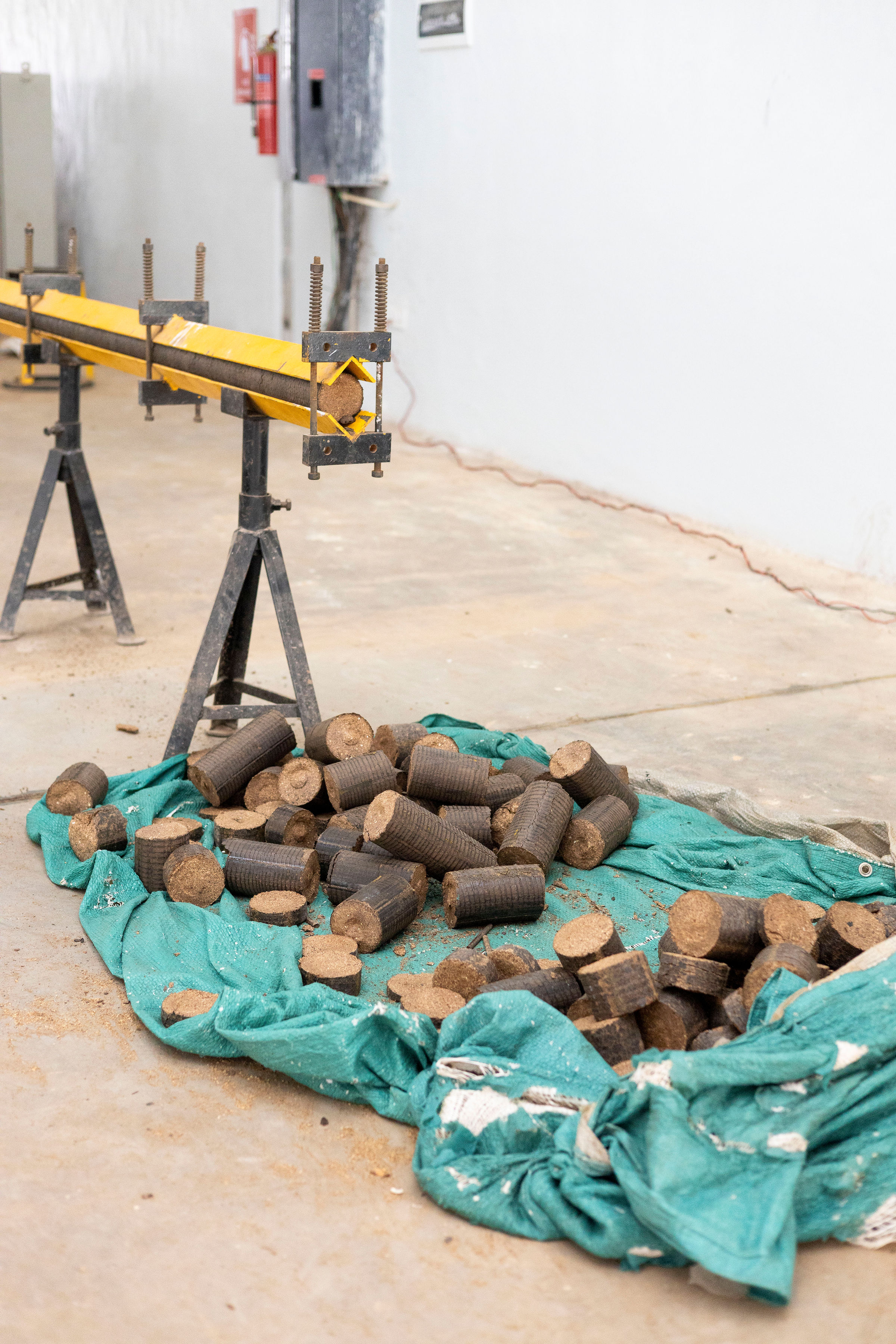
Building on these lessons, Phase 2 moves away from relying on residues farmers already depend on. Instead it focuses on dedicated, fast-growing woody bioenergy crops grown with smallholder farmers near Lusaka.
The trials started in September 2026 and will run until September 2029. They include:
The trials aim to answer the questions that matter for a business case that is good for farmers: which species and planting methods work locally, whether smallholders can take part profitably and sustainably, what realistic yields, costs and logistics look like, and how outgrower financing can be structured. If the evidence supports it, the goal is a model that could scale to between 10,000 and 20,000 farmers, giving them a more diversified income while supporting climate-resilient agriculture.
A shared commitment
Paolo Sergio, Head of Partnerships for the EU Delegation to Zambia, said: "The ETG Zambia Biofuels Pilot is actually a concrete example of the type of initiative we seek to promote. By exploring sustainable biomass production involving smallholder farmers, it has the potential to create new economic opportunities and contribute to cleaner industrial production."
ETG thanks FMO and DEG (Deutsche Investitions- und Entwicklungsgesellschaft), who supported Phase 1 of the project, as well as the Dutch Fund for Climate and Development, the European Commission, the EU Delegation to Zambia, the Dutch Ministry of Foreign Affairs, SNV, WWF-NL and the Empowering Farmers Foundation for their partnership, and the farmers who shared their time and knowledge.
Join us
ETG is still looking for partners to test more bioenergy business cases, including energy grasses such as Napier, sorghum and miscanthus, sunflower husks with outgrowers, and locally available sawdust from the woodworking and timber industries.
For partnership enquiries, please contact Kathryn James at Kathryn.James@etgworld.com.

